Fall detection that does not cry wolf
Lessons from IPBMS: grading every event, five-frame validation, and giving caregivers the first word
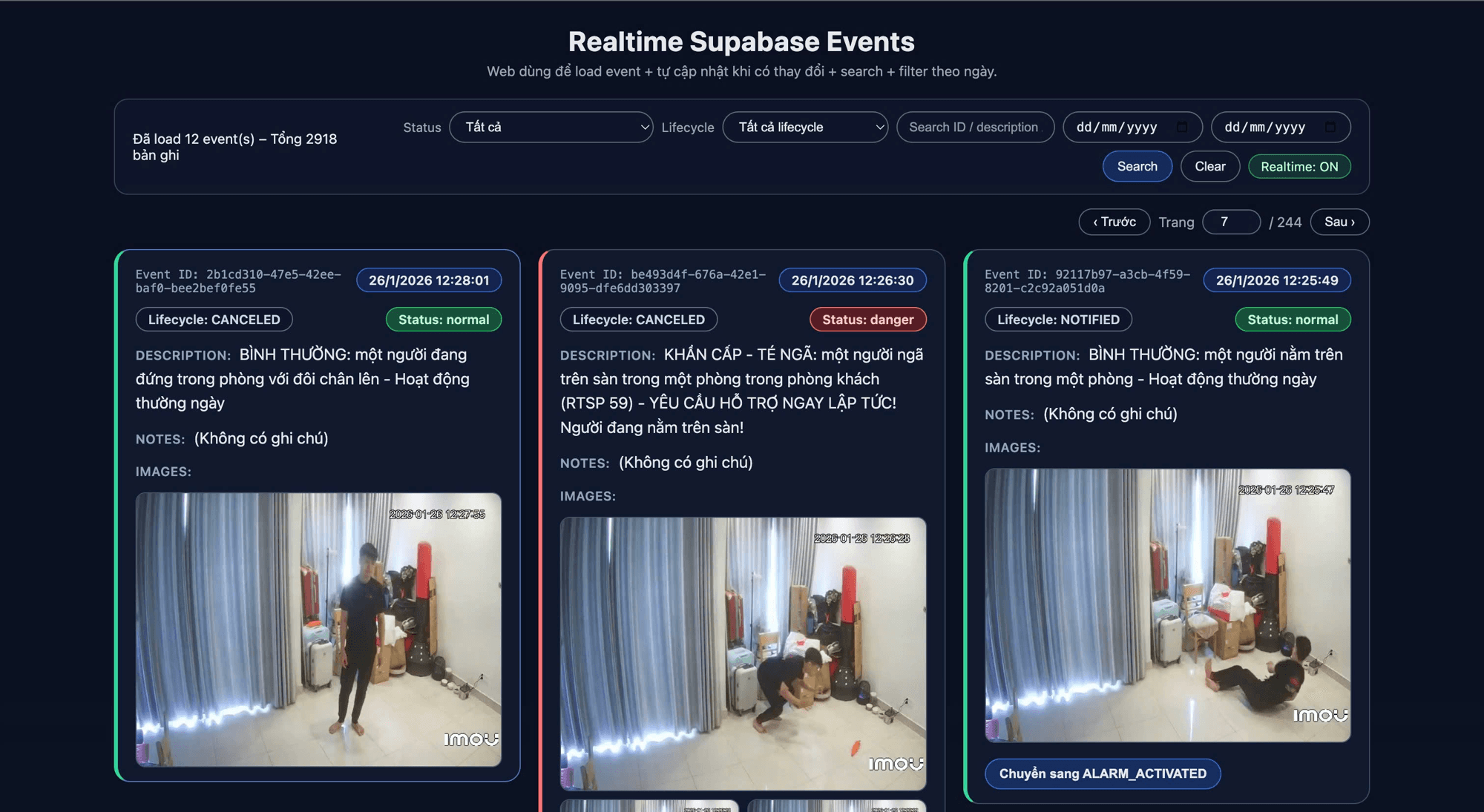
IPBMS watches the camera streams in patient rooms and raises an alert when someone falls or has a seizure. We built it with Whammy Tech. The hard part was never detecting a fall. It was not crying wolf.
From stream to skeleton
Ordinary IP cameras stream over RTSP into an OpenCV pipeline, which can run on a small edge box next to the cameras. Falls are detected from body pose with YOLOv8-Pose. Seizures come from a separate module that looks at how the skeleton moves over time rather than at a single frame.
Fewer false alarms
- Every event is graded Normal, Warning or Danger, instead of a single yes or no
- An event only escalates when five consecutive frames agree. That one rule removed most of the noise from people sitting down fast or bending over
- Every detection is written to a JSON log, so a nurse or an engineer can see afterwards exactly why an alert fired
Caregivers first
Alerts go out in real time over WebSocket and Supabase Realtime, to the dashboard and to a caregiver app. The caregiver can acknowledge, cancel or escalate. Alerts meant for the patient's family wait thirty seconds first, and if the caregiver cancels one as a false alarm, the family never sees it.
Missing a real fall is the worst outcome. A system nobody trusts comes second